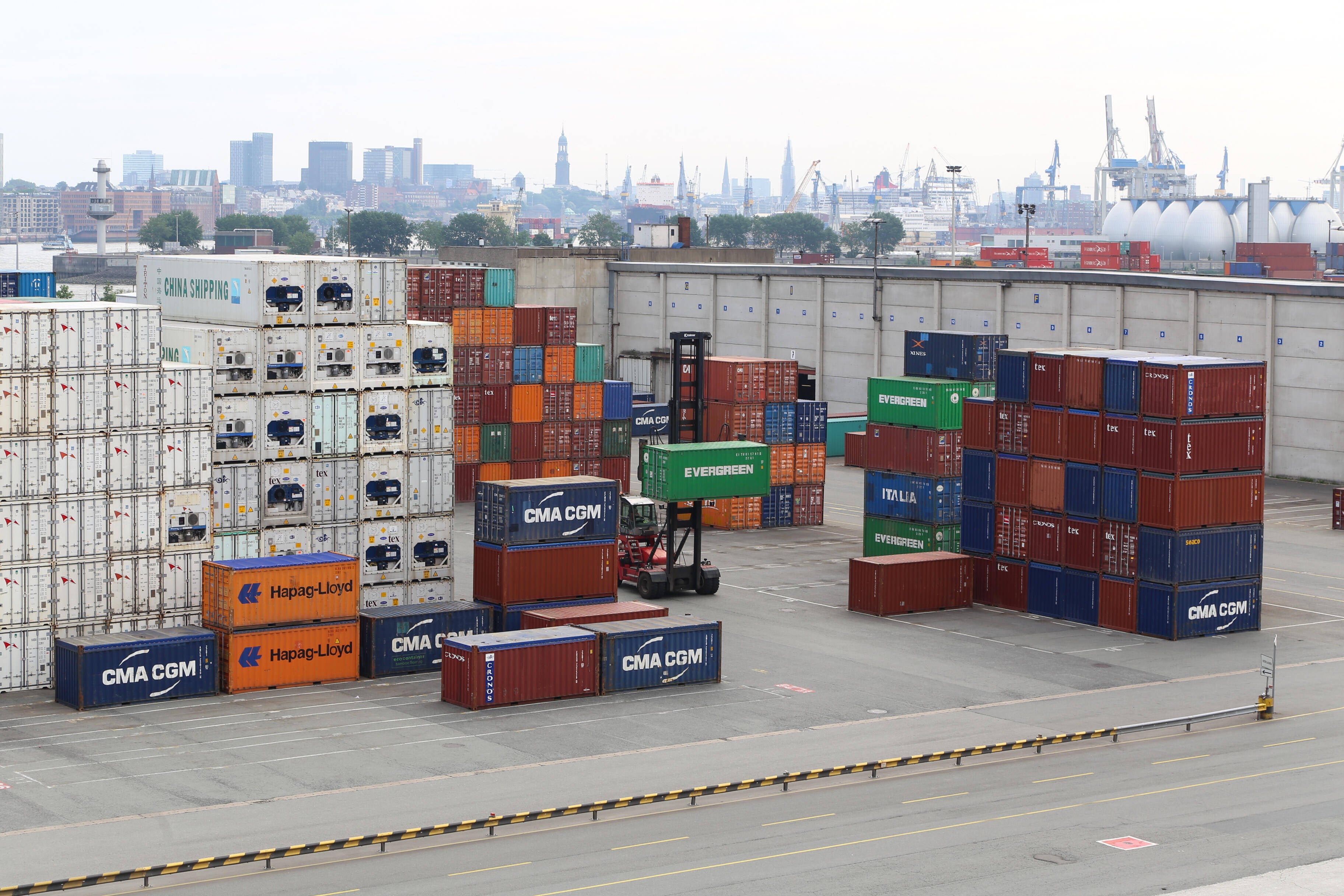
Structurally unbalanced trade flows are leading to a surplus of containers, and empty container transport is needed to redress this imbalance. Dr Johannes Schmidt, an expert in international port development and maritime strategy, explains the role of empty containers in an increasingly dynamic global trading environment.
Why are so many empty containers being transported around the world?
Dr Johannes Schmidt: Global trade is structurally unbalanced. If, for example, significantly more goods are transported from Asia to Europe than vice versa, there is not enough export cargo in Europe to fill large numbers of containers. We see the repositioning of empty containers as a necessary consequence of global imbalances, particularly between major trading regions such as Asia and Europe.
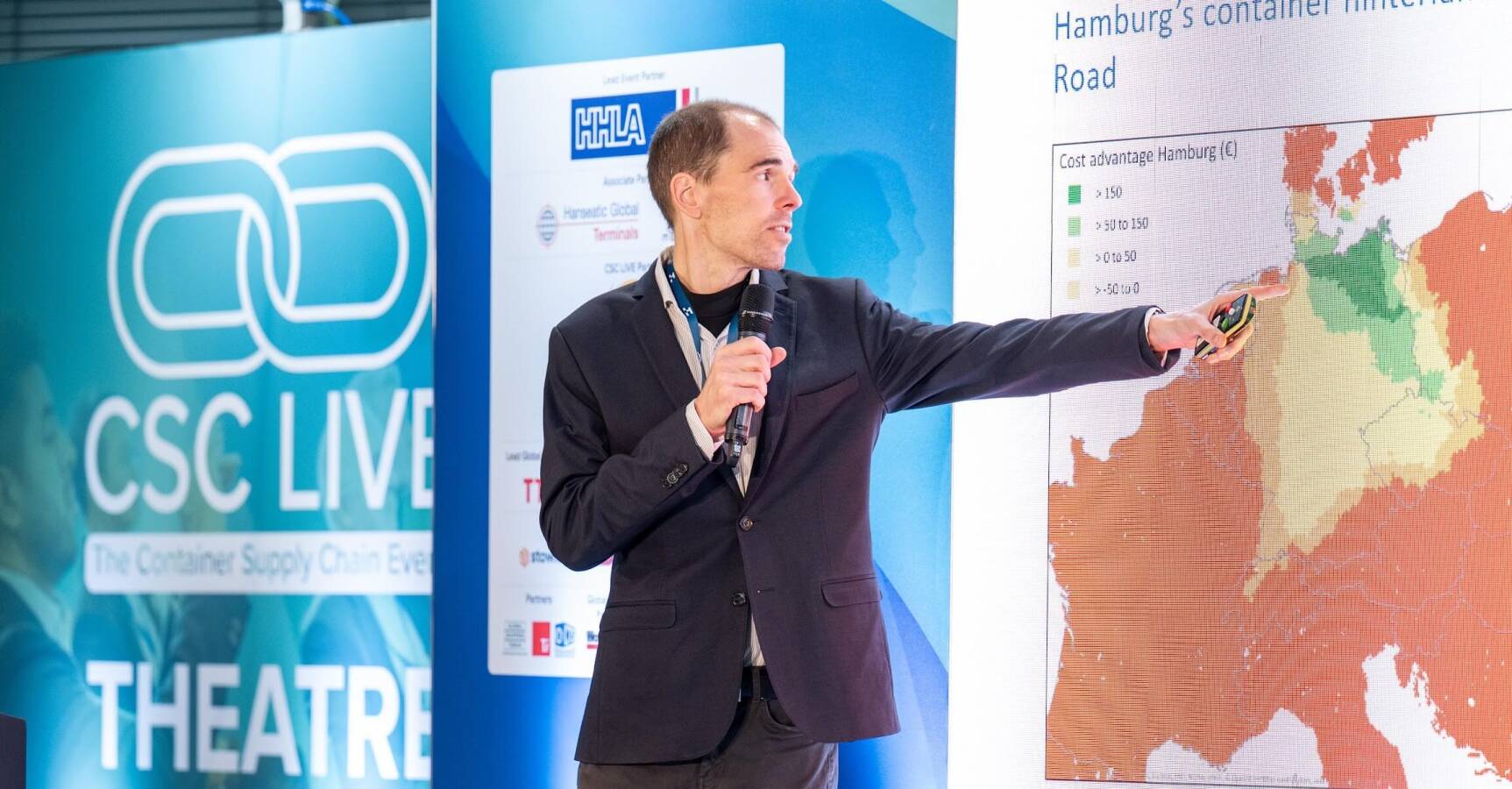
Dr Johannes Schmidt giving a presentation at the TOC in Hamburg.
If more loaded containers arrive than leave again with export cargo, does this turn Hamburg into a “parking lot” for empty containers?
Whilst empty containers do need to be stored temporarily somewhere, they are also part of a highly dynamic logistics system. An import surplus can place additional pressure on space and infrastructure, but Hamburg has a large and complex empty container logistics network.
So is Hamburg well-positioned for empty container logistics?
The situation is more nuanced than the simple formula ‘more imports = a port full of empty containers’ would suggest. Another crucial factor is how quickly containers can be distributed back into the hinterland, used for export cargo or transported back to the shipping lines. The real challenge, therefore, lies less in storage than in the speed of the cycle. The faster an empty container is put back into productive use, the less space and capital is tied up. And this works very well in Hamburg. For example, rail transport of empty containers from Hamburg depots is being further expanded.
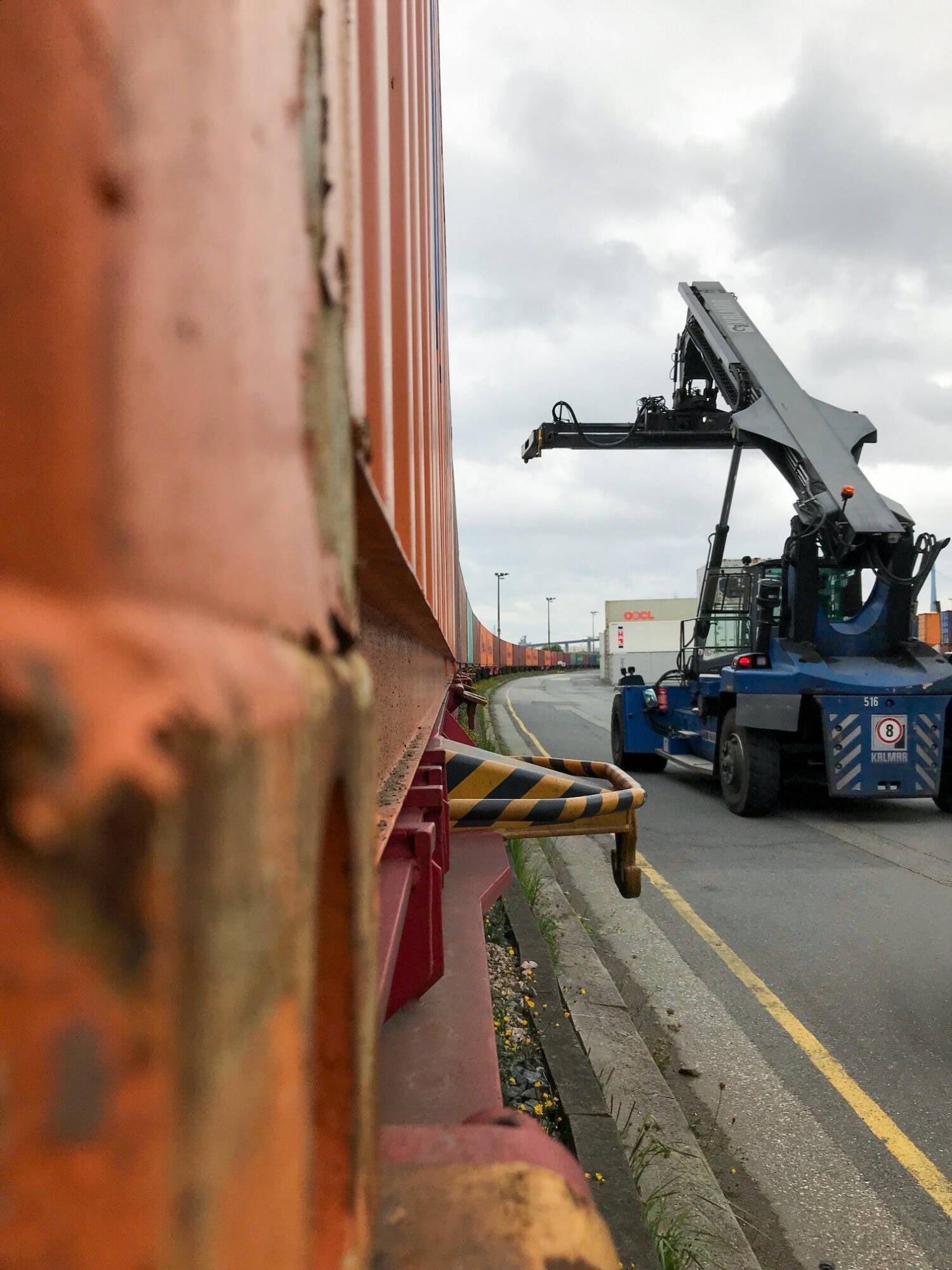
In Hamburg, HCCR is using rail more extensively to transport empty containers to shippers in the hinterland.
Will there soon be technological support for this process, e.g. with the help of AI and smarter planning?
Technology can make empty container logistics more efficient. Better data on container stocks, ship arrivals, export orders and hinterland transport allows us to identify at an earlier stage where containers are in short supply and where surpluses are arising. AI and optimisation methods can help in making highly complex decisions: Which container should be transported to which depot? Can an import container be reused directly for an export shipment? Can an empty journey be avoided?
But technology cannot completely eliminate the underlying cause. If, in a region, more containers arrive carrying goods than leave carrying goods on a sustained basis, a container surplus will inevitably arise. At some point, these containers must find their way back to where they are needed. In future, therefore, there will probably be fewer unnecessary movements of empty containers.
Empty containers are therefore a sign of an imbalance in global trade. Is this problem currently getting worse?
The underlying problem is not new. What is new, above all, is the speed at which global trade flows are currently changing. Tariffs, geopolitical tensions and the relocation of production sites are leading to a shift in established transport patterns. The trade conflict between the US and China is a good example of this. The change in tariff policy is affecting direct trade flows between the two countries, whilst Chinese companies are diversifying their sales markets more extensively. This is altering not only the volumes but also the geographical distribution of container flows.
Could you explain that in a bit more detail?
If, for example, more goods are shipped from China to Europe, the number of available containers there initially rises. If there are not enough European export shipments for the return journey to Asia, a container surplus arises. This must be balanced out by transporting empty containers. The key point is that the problem is becoming more dynamic. It is increasingly difficult for shipping lines and ports to plan container stocks in the long term and to respond to rapidly changing trade flows. As structurally unbalanced trade flows are hard to circumvent, it is essential to respond as flexibly as possible to short-term changes.

Dr Johannes Schmidt works as a Senior Project Manager at the ISL (Institute for Maritime Economics and Logistics) in the Strategy and Markets division. The ISL is an independent research and consultancy institute based in Bremen, specialising in the maritime economy, port development and logistics.

The interview was conducted by Christian Lorenz,
Editor-in-Chief at HHLA, on 15 October 2026.
Structurally unbalanced trade flows are leading to a surplus of containers, and empty container transport is needed to redress this imbalance. Dr Johannes Schmidt, an expert in international port development and maritime strategy, explains the role of empty containers in an increasingly dynamic global trading environment.
Why are so many empty containers being transported around the world?
Dr Johannes Schmidt: Global trade is structurally unbalanced. If, for example, significantly more goods are transported from Asia to Europe than vice versa, there is not enough export cargo in Europe to fill large numbers of containers. We see the repositioning of empty containers as a necessary consequence of global imbalances, particularly between major trading regions such as Asia and Europe.
Dr Johannes Schmidt giving a presentation at the TOC in Hamburg.
If more loaded containers arrive than leave again with export cargo, does this turn Hamburg into a “parking lot” for empty containers?
Whilst empty containers do need to be stored temporarily somewhere, they are also part of a highly dynamic logistics system. An import surplus can place additional pressure on space and infrastructure, but Hamburg has a large and complex empty container logistics network.
So is Hamburg well-positioned for empty container logistics?
The situation is more nuanced than the simple formula ‘more imports = a port full of empty containers’ would suggest. Another crucial factor is how quickly containers can be distributed back into the hinterland, used for export cargo or transported back to the shipping lines. The real challenge, therefore, lies less in storage than in the speed of the cycle. The faster an empty container is put back into productive use, the less space and capital is tied up. And this works very well in Hamburg. For example, rail transport of empty containers from Hamburg depots is being further expanded.
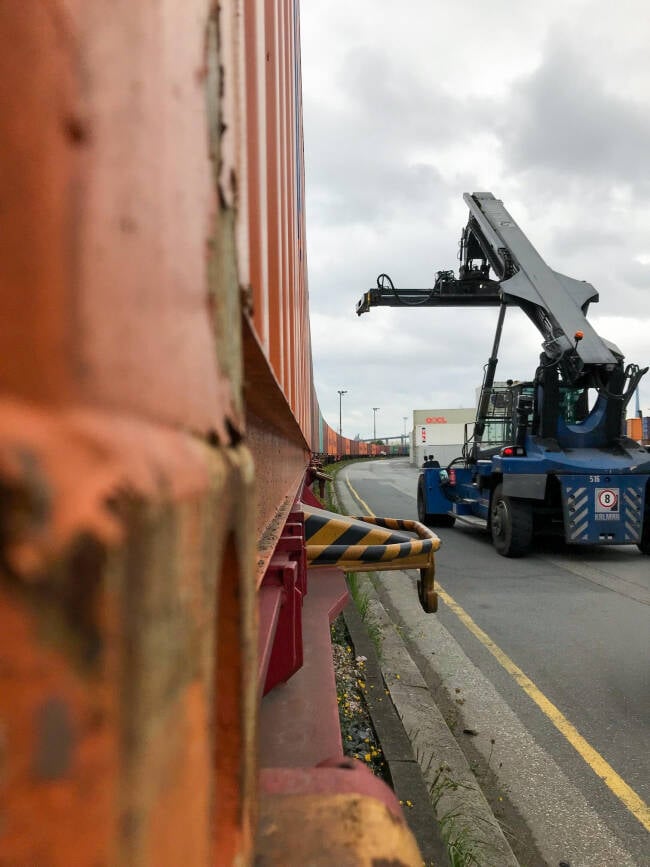
In Hamburg, HCCR is using rail more extensively to transport empty containers to shippers in the hinterland.
Will there soon be technological support for this process, e.g. with the help of AI and smarter planning?
Technology can make empty container logistics more efficient. Better data on container stocks, ship arrivals, export orders and hinterland transport allows us to identify at an earlier stage where containers are in short supply and where surpluses are arising. AI and optimisation methods can help in making highly complex decisions: Which container should be transported to which depot? Can an import container be reused directly for an export shipment? Can an empty journey be avoided?
But technology cannot completely eliminate the underlying cause. If, in a region, more containers arrive carrying goods than leave carrying goods on a sustained basis, a container surplus will inevitably arise. At some point, these containers must find their way back to where they are needed. In future, therefore, there will probably be fewer unnecessary movements of empty containers.
Empty containers are therefore a sign of an imbalance in global trade. Is this problem currently getting worse?
The underlying problem is not new. What is new, above all, is the speed at which global trade flows are currently changing. Tariffs, geopolitical tensions and the relocation of production sites are leading to a shift in established transport patterns. The trade conflict between the US and China is a good example of this. The change in tariff policy is affecting direct trade flows between the two countries, whilst Chinese companies are diversifying their sales markets more extensively. This is altering not only the volumes but also the geographical distribution of container flows.
Could you explain that in a bit more detail?
If, for example, more goods are shipped from China to Europe, the number of available containers there initially rises. If there are not enough European export shipments for the return journey to Asia, a container surplus arises. This must be balanced out by transporting empty containers. The key point is that the problem is becoming more dynamic. It is increasingly difficult for shipping lines and ports to plan container stocks in the long term and to respond to rapidly changing trade flows. As structurally unbalanced trade flows are hard to circumvent, it is essential to respond as flexibly as possible to short-term changes.
Dr Johannes Schmidt works as a Senior Project Manager at the ISL (Institute for Maritime Economics and Logistics) in the Strategy and Markets division. The ISL is an independent research and consultancy institute based in Bremen, specialising in the maritime economy, port development and logistics.
The interview was conducted by
Christian Lorenz, Editor-in-Chief at HHLA,
on 15 October 2026.